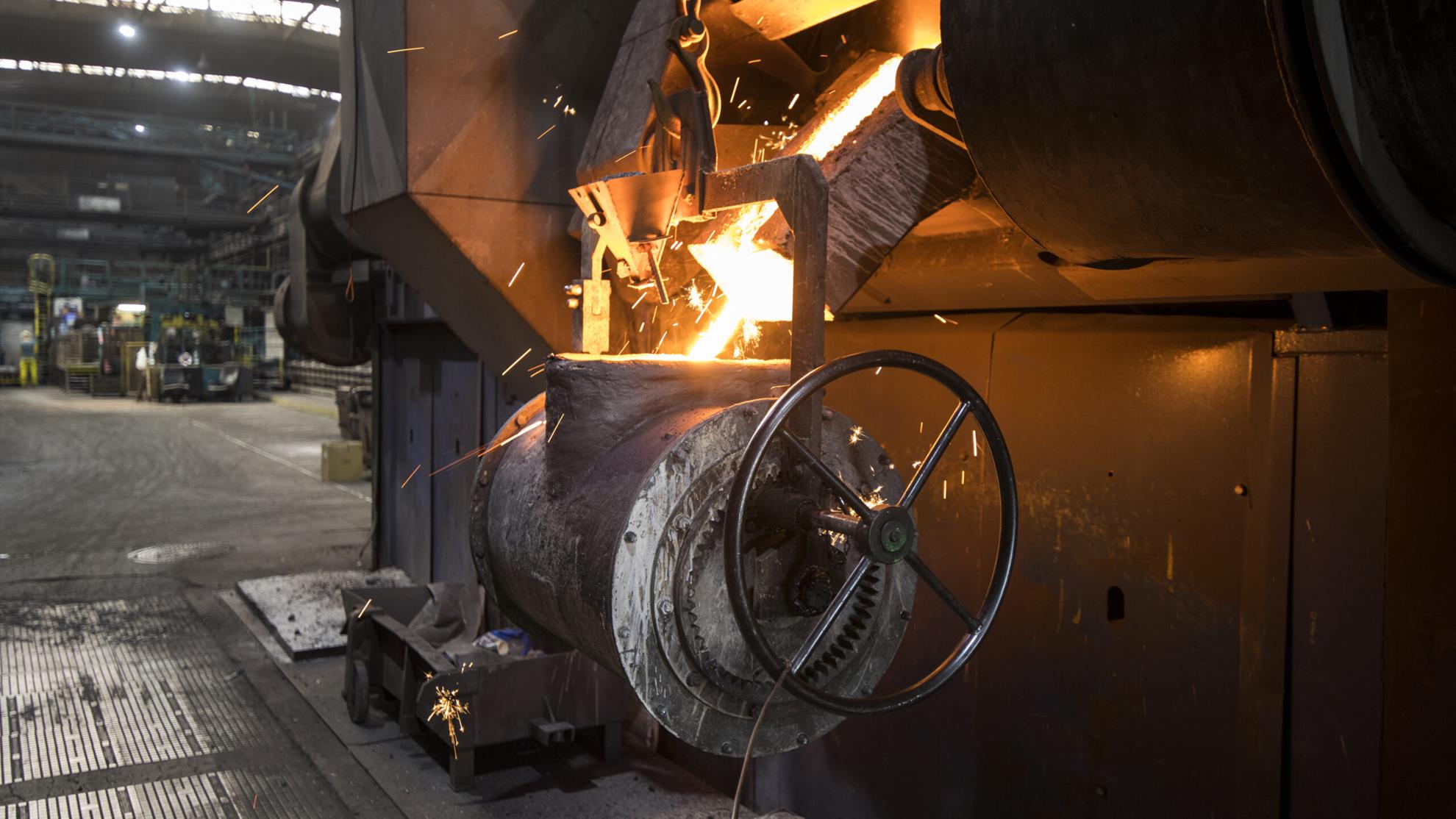
Ductile Iron and Its Advantages
Ductile iron, also known as nodular or spheroidal graphite iron, is an iron-carbon alloy that offers superior mechanical properties compared to traditional gray cast iron. It is characterized by high strength, excellent ductility and impact resistance, making it suitable for demanding technical environments. The key to the exceptional properties of ductile iron lies in its microstructure, which consists of graphite nodules embedded in a matrix of ferrite and pearlite.
Tensile Strength
One of the most significant advantages of ductile iron is its high tensile strength. Its yield strength is several times higher than that of standard gray cast iron, enabling it to withstand heavy loads and pressures without permanent deformation. Thanks to this strength, ductile iron is an ideal material for components subjected to dynamic forces, such as gears, crankshafts and heavy machinery components.
Ductility
In addition, ductile iron exhibits remarkable ductility, which allows it to deform under tension without fracturing. This property makes it an ideal material for components subjected to cyclic loading, such as crankshafts, gears and suspension parts. Its ability to absorb shocks and vibrations is particularly valuable in applications where safety and reliability are critical.
Durability
Beyond its mechanical properties, ductile iron offers excellent wear resistance and heat dissipation. These properties make it suitable for use at high temperatures and under abrasive conditions. Ductile iron is, for example, widely used in the automotive industry for engine components, exhaust manifolds and brake parts.
Versatility
The versatility of ductile iron also extends to its machinability and weldability. It can be easily machined into complex shapes, enabling intricate designs and precise manufacturing. The material also offers good weldability, which allows the fabrication of large structures and the repair of damaged components.